Card Game History
Halloween origins: Samhain, All Hallows and pumpkins
Where Halloween comes from, what Samhain was, and why pumpkins are carved: the folklore behind October 31, explained plainly.
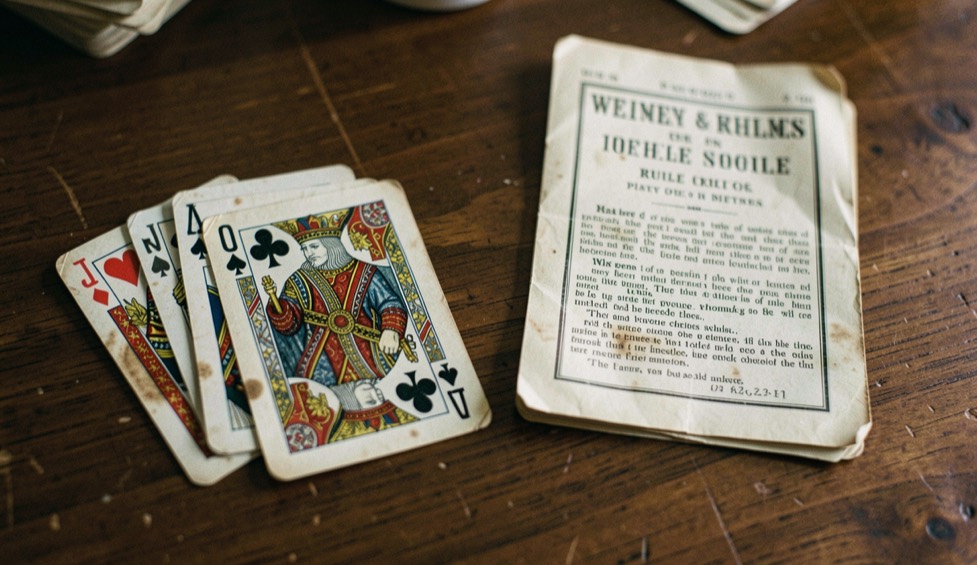
Halloween comes from the old Celtic festival of Samhain, a late-autumn marker in the Gaelic year that Christian missionaries later folded into the eve of All Hallows. What was celebrated before Halloween was not death but the turn of the season: the harvest brought in, the herds brought down, the dark half of the year begun. The carved pumpkin arrived much later, and it arrived in America, where a native gourd replaced the turnip that Irish and Scottish immigrants had been hollowing for generations.
Where does Halloween come from and what was celebrated before it?
The word itself records the sequence. "Halloween" is a contraction of All Hallows' Eve, the evening before All Saints' Day on November 1, a feast the Western church fixed in the eighth century. The night before a major feast was a vigil, and a vigil was a religious occasion, not a party. But the date the church chose sat on top of an older one.
In Ireland, Scotland and the Isle of Man, November 1 opened Samhain, the first day of winter in the Gaelic calendar. The night before, October 31, was Oíche Shamhna, the eve of Samhain, and it carried its own customs long before it carried a Christian name. Cattle came in from summer pasture. Slaughter and salting began. Households settled accounts and prepared for the months when travel and work outdoors would shrink. The boundary between the year's light half and dark half was understood as thin, and thin boundaries invite stories about what might cross them.
That is the honest answer to what was celebrated before Halloween: a seasonal threshold, observed with fire, food and divination, in a farming society that measured time by herds and harvests rather than by a printed calendar. The dead were remembered at this turn of the year in many accounts, but so were the living: who would marry, who would travel, who would survive the winter. The folklore that survives is domestic and practical as much as it is supernatural.
For readers who want the full arc from those fireside customs to the modern porch light, the samhain to halloween history is treated at length in the editorial archive of The Hollow Lantern, an independent English-language magazine devoted to Halloween's origins, its old imagery and the making of October.
What exactly was Samhain?
Samhain was a Gaelic festival marking the start of winter, held around November 1, with the preceding night as its most charged moment. It was one of four seasonal turning points in the Gaelic year, alongside Imbolc in early February, Bealtaine in early May and Lughnasadh in early August. Each sat roughly a quarter of the year from the next, and each was tied to the work of a pastoral and agricultural people.
The spelling and pronunciation matter to anyone reading older sources. "Samhain" is Irish; the Scottish Gaelic form is Samhainn or Samhuinn, and the Manx is Sauin. In Irish, the word is also the ordinary name for the month of November, which is a useful reminder that this was a calendar term before it was a spooky one. Nineteenth-century antiquarians and twentieth-century popular writers often blurred the festival into a single night of the dead, but the older material describes a season, a gathering and a set of obligations.
What actually happened at Samhain varied by place and century, and the written record is thin and late. What can be said with confidence is that communal fire, feasting, and the settling of debts and dues belonged to it; that the boundary between the human world and the otherworld was thought to be open; and that much of what later became Halloween divination, from apple games to mirror gazing, descends from the practice of reading the coming year at this hinge of the calendar. Bonfires in Ireland and Scotland on October 31 continued into the modern period, and the word "bonfire" itself is usually traced to bone fires, though the etymology is contested.
Why do we carve pumpkins for Halloween?
The jack-o'-lantern began as a turnip. In Ireland and Scotland, people hollowed out root vegetables, most often turnips and sometimes beets or potatoes, carved a face into the side, and set a candle or a burning coal inside. The object was carried or set in a window on the nights around Samhain and All Hallows. The name comes from the folk figure Jack, a man barred from both heaven and hell and condemned to walk with a single ember in a hollowed turnip, a story recorded in various forms in nineteenth-century Ireland.
When large numbers of Irish and Scottish immigrants reached North America in the nineteenth century, they found a vegetable that made the job easier. The pumpkin is native to North America, larger, softer and far simpler to hollow than a turnip. By the late nineteenth century, American periodicals were describing pumpkin lanterns as a standard Halloween decoration, and the turnip version faded on this side of the Atlantic. The carving itself is a recent folk art in the American sense: the elaborate, sculpted pumpkin is a twentieth-century development, and the practice of displaying a lit pumpkin on a porch is more recent still.
A practical note belongs here, because the question is often asked alongside the history. A carved pumpkin lasts longer if the interior is scraped clean, the cut surfaces are kept dry, and the lantern is brought indoors or into shade during the day. A candle flame inside a dried gourd is a fire risk; a battery light is not. The old turnip lanterns were small and burned briefly, which is one reason the custom was a single-night affair rather than a month-long display.
How did the eve of All Hallows become Halloween?
The church did not simply replace Samhain. It layered a calendar over a calendar. All Saints' Day was established in the West by Pope Gregory III in the eighth century and fixed to November 1; All Souls' Day followed on November 2 in the eleventh century. The evening before All Saints' was All Hallows' Eve, and the name shortened in speech to Hallowe'en, then Halloween. In the English-speaking world the word is attested from the sixteenth century.
The older customs did not disappear; they migrated. Soul cakes, small breads given to the poor who went from door to door saying prayers for the dead on All Souls' Day, are one ancestor of the modern trick-or-treat round. Guising, the Scottish and Irish practice of going house to house in disguise and performing a song or a joke in exchange for food or coins, is another. Both customs crossed the Atlantic and were reshaped by American suburbia in the twentieth century into the doorbell-and-candy routine that most families now recognize.
What survives in the folklore today?
Several Halloween superstitions are older than the holiday's American form. Black cats were long associated with witches in European folklore, and the association hardened in the witch trials of the sixteenth and seventeenth centuries; the cat's bad luck on Halloween is a later, lighter reading of that history. Mirrors and water were used for divination at Samhain, on the theory that a young person could see a future spouse's face. Nuts roasted in a fire, apples peeled in one strip and thrown over the shoulder, and the shapes of egg whites dropped into water were all methods of reading the year ahead.
Fire belongs to the season as well. Bonfires on the eve of Samhain were recorded in the Scottish Highlands and in parts of Ireland, and the practice of lighting a fire against the dark half of the year is older than any single story attached to it. The modern porch light is a quieter version of the same impulse: a small, controlled flame against the early night.
What the folklore shows, taken together, is that Halloween was never one thing. It is a Christian vigil, a Gaelic seasonal marker, a set of domestic divination games, and an American neighborhood custom, layered in that order and still shifting. The carved pumpkin on the step is the newest layer, and the easiest to explain: a turnip, a story, and a continent with better gourds.
| Section | The reading |
|---|---|
| Where does Halloween come from and what was celebrated before it? | The word itself records the sequence. |
| What exactly was Samhain? | Samhain was a Gaelic festival marking the start of winter, held around November 1, with the preceding night as its most charged moment. |
| Why do we carve pumpkins for Halloween? | The jack-o'-lantern began as a turnip. |
| How did the eve of All Hallows become Halloween? | The church did not simply replace Samhain. |
| What survives in the folklore today? | Several Halloween superstitions are older than the holiday's American form. |
Source: britannica.com
Source: history.com