Suite 03 · Tournament Formats
Tournament formats: brackets, duplicates, rotation
How card tournaments actually run: bracket sizes from 8 to 64 players, the duplicate format that cancels the luck of the deal, and the euchre rotation.
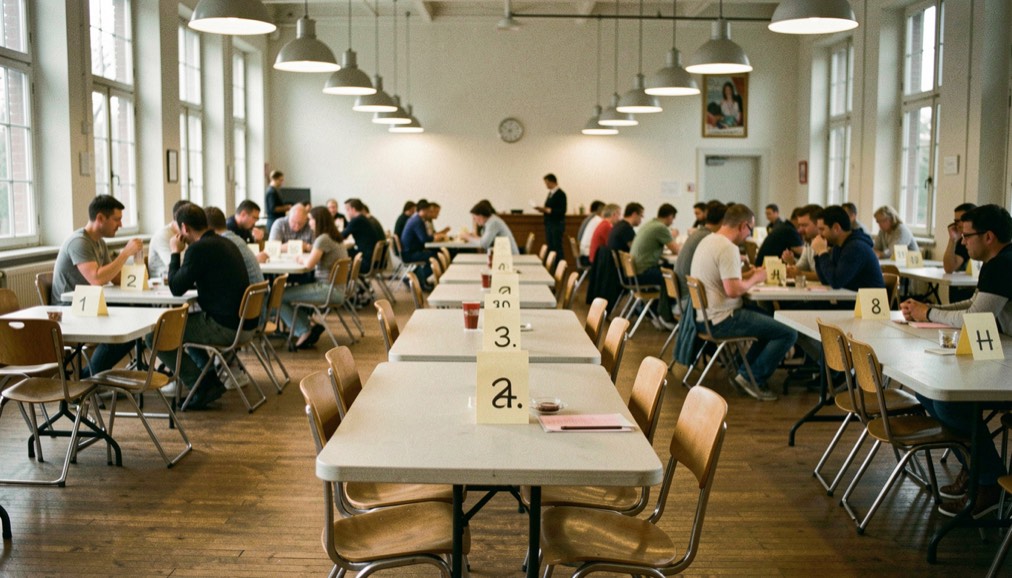
A card tournament is a schedule before it is a competition. The format decides who meets whom, how luck is shared out, and whether the room finishes at eleven or at one in the morning. This suite covers the three shapes a host needs: the bracket that narrows a field fairly, the duplicate movement that lets two tables compare plays instead of deals, and the euchre rotation that keeps partnerships changing until someone has earned the win.
Every guide carries the arithmetic in a table, because a format you cannot compute on a napkin is a format that fails in the third round. The numbers here are the ones tournament organizers have used for a century: powers of two, byes, and the counting that keeps every player playing.
In this suite
-

Head-to-head or the whole field: what match play and stroke play teach
Every card organizer eventually chooses between the duel and the field; golf settled the same question long ago with two formats that price a mistake in opposite ways.
-

One night, eight fighters: the tournament format that television built
In 1993 a Tokyo tournament compressed a whole championship into one broadcast evening: eight fighters in, one champion out, and a format the card table still borrows.
-

From brackets to pyramids: how a team sport ranks a season
A bracket crowns an evening and a pyramid ranks a year; the two formats answer different questions, and a club sport in Limburg shows the pyramid working in its plain form.
-

Classes and divisions: how a tournament stays fair from E to S
A tournament stays fair by refusing to seat beginners against veterans for the same prize: the class system is the mechanism, and sport dancing runs it in its most legible form.
-
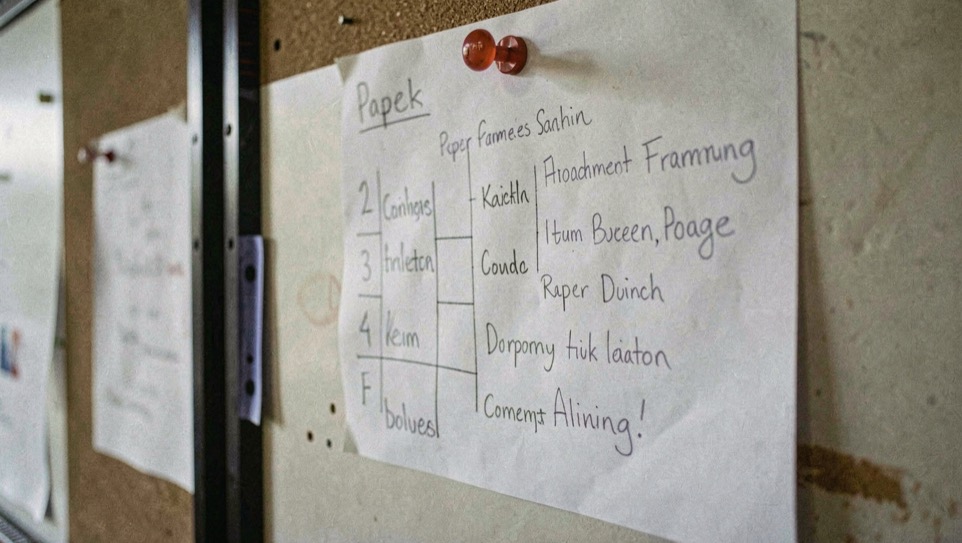
Card tournament brackets from 8 to 64 players
A card tournament is arithmetic before it is drama: pick the bracket that fits the field, know the round and match counts in advance, and the evening runs itself.
-
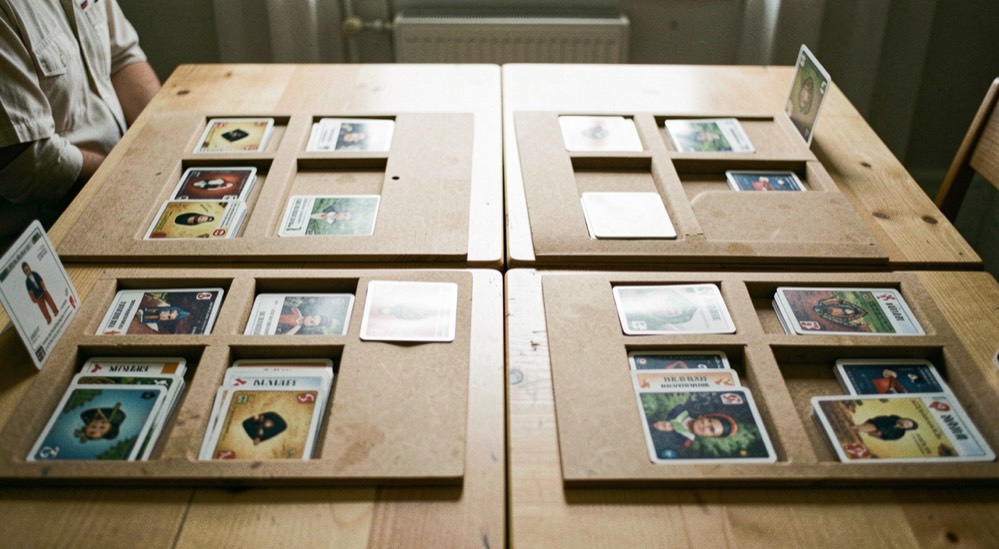
The duplicate format for party card games
Duplicate is the honest format: two tables play the same deals, and the comparison of results, not the shuffle, decides who played the cards better.
-
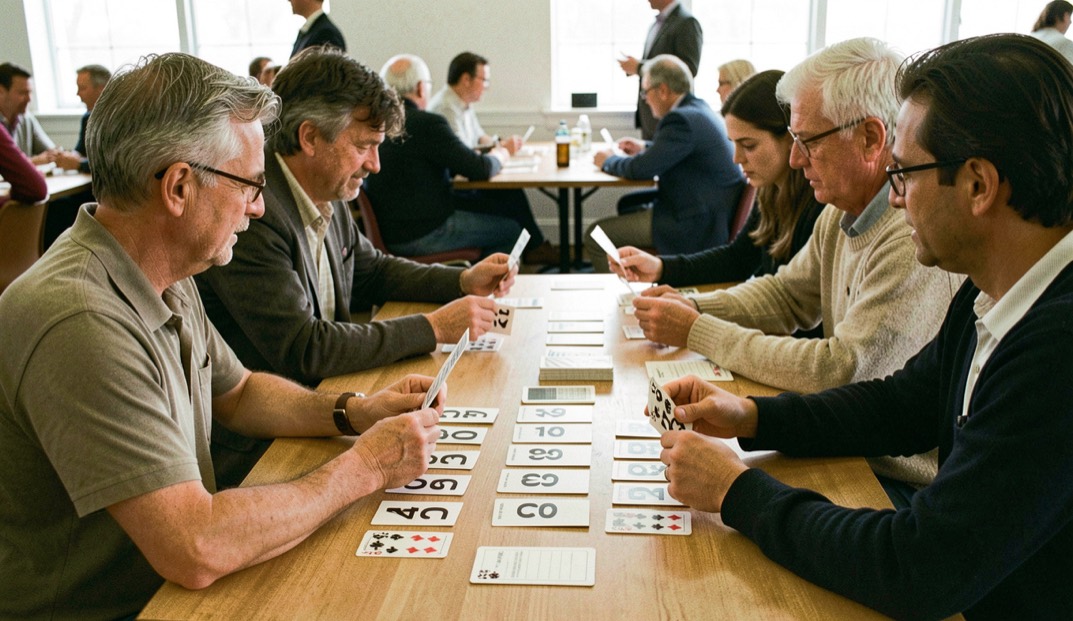
How to run an euchre tournament night
The euchre tournament is the great American card party: partnerships change every round, points pile up on a tally card, and one player goes home the champion by eleven at night.
Every guide in this suite reads against the Scoring & Sheets arithmetic, and two neighbouring suites extend it: Game Rules and Strategy Guides.