Hosting Game Nights
Workshop practice on the Anne Arundel shore
A documentary look at workshop practice along the Anne Arundel shore of the Chesapeake: easel habits, local clay, bench work and field notes.
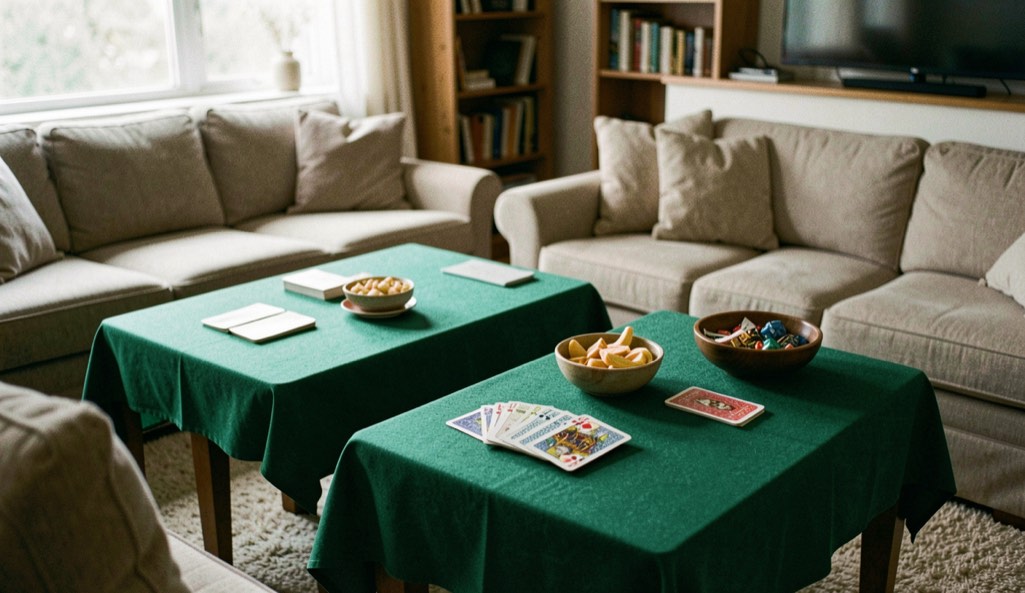
Workshop practice along the Anne Arundel shore of the Chesapeake is documented in plain, seasonal terms: painters set up easels to read tidal light, potters work local clay through repeated firings, and bench workers keep daily notebooks. The record is practical rather than promotional, and it is kept by practitioners who return to the same water, the same tables and the same pages.
What is The Working Shore?
The Working Shore is an independent English-language documentary chronicle of workshop practice around the Anne Arundel shoreline on the Chesapeake. It covers three broad subjects: plein air painting on the bay, shore ceramics from local clay, and manual work at the water's edge, including bench carpentry, sharpening, relief engraving, press proofs and daily field notes on the strandline. Its audience is mostly amateur practitioners, studio students and readers who pay attention to documented gestures. The shore workshop chronicle treats each of these as a season-by-season record rather than a finished product, which makes it useful to anyone trying to understand how a working routine is actually kept.
Plein air painting on the bay: easel habits and session lengths
Painting outdoors on the Chesapeake is organized around the tide and the clock. A painter arriving at the shore sets the easel so the light falls across the panel rather than into the eyes, and the palette is kept small because the water and sky change faster than a large layout can be corrected. Sessions are usually short. A common pattern is one block of work in the morning and a second block in the late afternoon, with the middle of the day reserved for drying, scraping down or walking the shoreline to note where the light will fall next.
The palette itself follows the bay. Grey-greens, muted blues, ochres and warm whites appear repeatedly, because the water rarely reads as a single blue and the marsh edge rarely reads as a single green. Reading tidal light means watching how the surface breaks into bands: a darker line where the channel runs, a brighter plane where the shallows catch the sky, and a moving edge where wind crosses the water. Painters who work this shore learn to place those bands early and leave them alone.
Winter work changes the problem. When the water and sky flatten into similar values, the painter has to find structure in edges, in the shape of pilings, in the line of a jetty, or in the way a distant shore sits against a low horizon. Session lengths often shorten, and the notebook becomes more important than the panel, because the useful information is the sequence of light rather than a single finished view.
Shore ceramics: local clay, wheels and firing logs
Ceramics on this shore begins with material. Local clay is dug, dried, broken down and recombined with water until it can be centered on the wheel. The work is repetitive by design: wedging on the table, centering, opening, pulling walls, trimming at the leather-hard stage, then drying slowly enough that rims do not crack. A potter's day is measured in batches rather than in single pieces.
Firing is where the record becomes documentary. Each firing is logged season by season, with notes on stacking, atmosphere, temperature and outcome. The log is not a marketing document. It records what actually happened: which glazes ran, which rims warped, which load cooled too quickly. Over a year, those entries turn into a usable map of the kiln's behavior in different weather.
The wheel and the wedging table are the two fixed points of the studio. Around them, the potter keeps shelves of test tiles, buckets of slip and a drying board that moves with the humidity. Shore clay is not uniform, so the log has to carry the differences between one digging and the next. That is the point of keeping it.
What does manual work at the water's edge involve?
Manual work at the water's edge covers bench carpentry and sharpening, relief engraving and press proofs, and the daily notebooks and field surveys kept along the strandline. Bench work is mostly preparation: flattening a board, truing an edge, setting a plane, grinding a bevel and testing it on scrap before it touches the actual piece. Sharpening is treated as a skill in its own right, with a sequence of stones and a repeatable angle rather than a quick touch-up.
Relief engraving adds a second layer of documentation. A block is cut, inked, proofed on the press, corrected and proofed again. Each proof is dated and kept, because the sequence of states is the real record of the image. Nothing is discarded early, since a rejected proof often explains a later decision.
Field notes on the strandline close the loop. Walkers record what the tide has left: weed lines, shell beds, driftwood, lost rope, the height of the last high water. These entries are short and dated, and they are kept in the same notebooks as the workshop notes. Over a season, the two kinds of record begin to explain each other, because weather that changes the shore also changes the drying time in the studio.
How do the three practices connect?
All three practices share a method: observe, record, repeat, and let the record correct the next attempt. The painter reads light and writes down the hour. The potter reads clay and writes down the firing. The bench worker reads the material and writes down the cut. In each case the notebook is the working instrument, not a souvenir.
The connection is also physical. The same shore supplies the subject, the clay and the drift material. The same weather decides whether a session is possible. The same tide sets the schedule for anyone working at the water's edge. A workshop on this coast is therefore organized around a place, and the documentation is what makes the practice legible to someone who was not there.
Keeping a seasonal record
A seasonal record has three requirements. First, a fixed format: date, place, conditions, materials, time spent, result. Second, a fixed interval: daily entries, weekly summaries, or one page per firing. Third, a fixed place to keep it, so that entries are not scattered across loose paper.
The value appears slowly. After a year, the record shows which months are productive, which materials fail in humid weather, and which light is worth the trip. For readers of The Working Shore, that is the useful part: not a finished object, but a documented routine that can be compared with their own. The practices described there are ordinary, repeatable and tied to a specific coastline, and the record is what keeps them from disappearing into memory.
| Section | The reading |
|---|---|
| What is The Working Shore? | The Working Shore is an independent English-language documentary chronicle of workshop practice around the Anne Arundel shoreline on the Chesapeake. |
| Plein air painting on the bay: easel habits and session lengths | Painting outdoors on the Chesapeake is organized around the tide and the clock. |
| Shore ceramics: local clay, wheels and firing logs | Ceramics on this shore begins with material. |
| What does manual work at the water's edge involve? | Manual work at the water's edge covers bench carpentry and sharpening, relief engraving and press proofs, and the daily notebooks and field surveys kept along the strandline. |
| How do the three practices connect? | All three practices share a method: observe, record, repeat, and let the record correct the next attempt. |
| Keeping a seasonal record | A seasonal record has three requirements. |
Source: chesapeakebay.net