Scoring & Sheets
Score sheets that keep the game honest
Most card game arguments are scoring arguments, and scoring arguments die the moment the sheet is designed properly: one line per hand, one running total, no blanks.
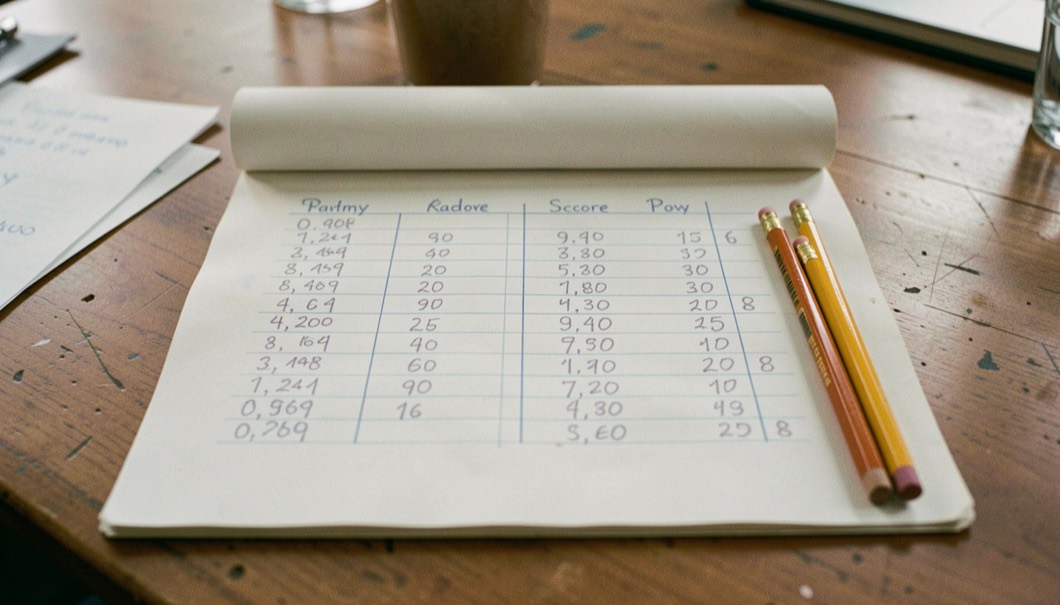
A score sheet is the quiet official at every card table. It decides arguments before they start, because a total that was written at the moment it happened outranks every memory, including the memory of the person who is winning. The difference between a peaceful game night and a sulky one is usually not the rules and never the deal; it is whether the sheet was designed so that writing the score was easier than arguing about it.
What every sheet must carry
Whatever the game, a score sheet needs five things: the date and the players, so the sheet survives the evening as a record; one line per hand, dealt left to right like the game itself; a score column per player or partnership; a running total column, updated every line; and a notes margin wide enough for a pencil word. Sheets that omit the running total force mental arithmetic at the exact moment tempers are shortest, and sheets without a notes margin leave disputes nowhere to be settled except out loud.
One design per game, not one sheet for all
Each classic game scores differently, and the sheet should carry the game's own shape rather than a generic grid. The table below is the whole design manual: copy the columns, rule the lines before the players arrive, and the sheet disappears into the evening.
| Game | Columns per line | The column that saves arguments |
|---|---|---|
| Euchre | hand, maker or defenders, points, running total | maker column, because lone hands live there |
| Spades | hand, bid, made, bags, running total | separate bag column, never folded into points |
| Pinochle | hand, bid, meld, trick points, running total | bid written before play, not after |
| Bid Whist | hand, bid, made books, points, running total | books column, so a Boston reads as seven |
| Hearts | hand, hearts taken, queen, running total | queen column, the thirteen point witness |
The pencil protocol
Tournament sheets run on a protocol any table can adopt in one sentence: the score is written by one agreed keeper, in pencil, at the end of every hand, before the next card is dealt; a blank stays a blank, never zero by silence; and any correction is struck through once, initialed by the opposing side, and rewritten. No erasures. The protocol sounds bureaucratic for thirty seconds and then becomes invisible, and it removes the two classic tricks of card table scoring: the blank that becomes a zero in one player's story and the smudge that becomes a seven.
The tournament tally card
Tournament play adds one document to the sheet: the tally card, carried by each player through a rotation night. The classic card carries the player's name at the top and a grid of rounds, with the table number and the partner's name written fresh each round, and the hand score entered as the hands are played. The card is the player's receipt: totals are signed by the round's last partner, and the prize reading at the end of the night is arithmetic on cards, not on memories. Progressive euchre, the hundred year old format, runs entirely on these cards, which is why the tournament guide and this one keep referring to the same piece of paper.
The zero rule
One habit above all others keeps a sheet honest: write zeros. A blank line means nothing at nine o clock and anything at midnight, and every scoring dispute that survives a well designed sheet traces back to a blank. The keeper writes a zero for every hand where a side scored nothing, draws the running total forward even when it does not change, and initials any line where the table agreed to something unusual. The sheet then reads like a score should: no gaps, no stories, just the evening in pencil.
A checklist before the first deal
Hosts who prepare the sheet before the guests arrive never think about it again. The whole checklist fits in a minute:
- Rule the columns before play, one line per hand, with the running total beside the score.
- Write player or partnership names at the top, in ink, so the sheet outlives the evening.
- Agree the keeper of the pencil, and give the other side the eraser, which is to say: no eraser.
- Fix the house variants at the top margin: game to what, bags or no bags, lone hand values.
- Keep a second pencil on the table, because the first will roll.
Common mistakes
Scoring in ink, which makes every correction look like forgery. One shared running total for two partnerships, the sheet equivalent of a shared bank account. Writing the bid after the hand in pinochle and Bid Whist, which launders every overbid. Folding bags into the points column in spades, where they metastasize silently. And starting the evening on the back of an envelope, which announces that the score is negotiable before a single card is dealt.
The sheet is the referee
Design the sheet for the game, write every hand the moment it ends, and the score becomes the least interesting thing at the table, exactly as it should be. The numbers that fill these columns are collected for pinochle in the scoring guide and for Bid Whist in the books guide, and the rotation that turns five tidy sheets into a tournament is the euchre tournament night.