Strategy Guides
Spades strategy: bidding counts and nil
Spades strategy lives in one habit: converting a thirteen card hand into an honest number before anyone leads, and knowing when the honest number is zero.
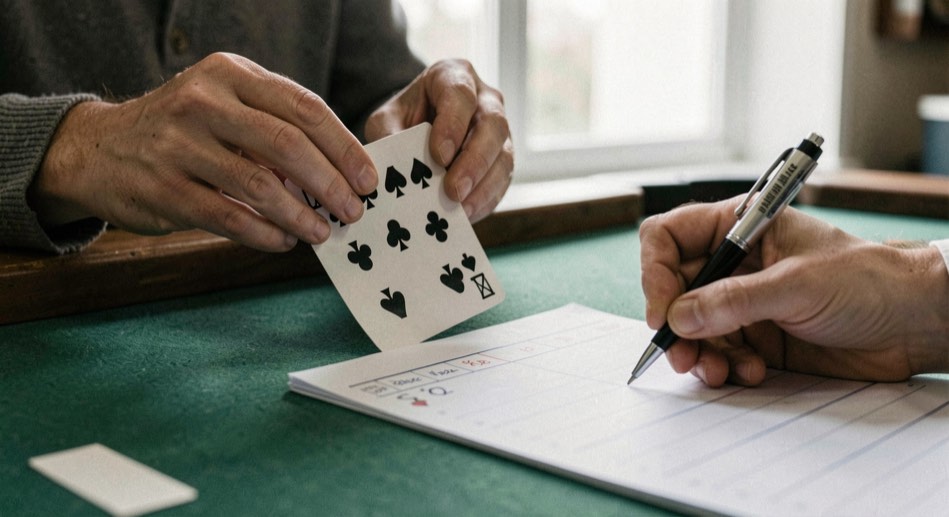
Every spades hand begins with the same problem: turn thirteen cards into one number, in public, before a card is led. Bid too low and the extra tricks pile up as bags; bid too high and the contract fails at ten points a trick. The players who win at spades are not the boldest bidders but the most accurate ones, and accuracy is a count anyone can learn: sure tricks, covered losers, and the length that quietly produces the extra tricks everyone pretends not to want.
Counting the sure tricks
Start with the spades themselves, because spades are always trump and every spade above your opponents' spades is a trick. Count high spades you hold, subtract the higher spades you have seen in play, and the remainder is your trump trick estimate. Add aces of side suits, which take a trick wherever they appear. Add kings only when the ace beneath them is gone or in your hand. A king second to play behind an unseen ace is a liability wearing a crown, and accurate bidders bid it as nothing.
Length is the silent bidder
After the sure tricks, count length: a five card side suit produces an extra trick by exhaustion in the average hand, a six card suit nearly always does. The standard bid is sure tricks plus roughly half the expected length tricks, adjusted by memory of the table: a table that overbids by habit feeds you bags, and a table that underbids punishes your own conservatism. Partnerships may not confer, but the sum of the two bids tells each player what the combined contract needs, and that arithmetic is legal, expected and decisive.
| Count | What to count | Typical value |
|---|---|---|
| High spades | Each spade likely to win a trick | one per winning spade |
| Side aces | Every ace outside the trump suit | one each |
| Guarded kings | King with the ace dead or in hand | one each |
| Long suit | Tricks from suit exhaustion | one per card over four |
| The bid | Sure tricks plus half the length tricks | the honest number |
Nil: the second contract
A nil bid converts a weak hand into a weapon: the partnership scores one hundred for a successful nil regardless of the trick contract, and the nil player's dodges often feed exactly the tricks the partner's contract needs. Nil wants a specific hand: short spades, no ace, as many low cards as possible, and at least one suit so weak that discards flow out of it for the whole hand. Nil with two aces is theatre, and theatre costs a hundred points at the standard price.
Protecting a nil
The nil player's partner plays the most delicate hand in the game. She covers leads into the nil's weakness, refuses to lead suits the nil must win from, and takes every trick the nil player cannot duck, including the ugly ones that fill the bag column. The partnership pays for nil protection in bags, and the trade is usually worth it: one hundred points against three or four bags is a profitable exchange at any score. The nil player herself leads low from long suits early, saving the lowest card of each suit for the endgame where a forced win kills the contract.
The endgame count
The last five tricks of a spades hand are played with the whole deal visible in the count, and accurate players narrate it silently: seven spades have been played, I hold three, so three are out against my sequence. In the endgame the lead itself becomes the weapon. The partnership holding the last high spade strips the side suits first, so the spade winner leads spades and forces every remaining player to ruff with cards they needed for control. The defense answers by shedding its losers early, before the lead transfer locks them in. Every endgame plan is the same two counts repeated: how many trumps remain, and who must win the next trick.
Common mistakes
Bidding the aces and ignoring the long suit, then bagging to death at three overtricks a hand. Protecting a nil by winning tricks with high cards the partnership needed for its own contract. Breaking spades early with three trumps, which feeds the opponents' ruffs and shortens your own endgame. Chasing a blind nil while leading, the option reserved for the trailing partnership for a reason. And letting the bag column drift past six without a conversation, because at ten the hundred point bill arrives all at once.
The number is the strategy
Spades rewards tables that bid from a worksheet and punishes tables that bid from mood. Count the spades, count the aces, add half the length, let the partnership sum speak, and treat nil as a hand shape rather than a mood swing. The rules and the exact scoring machine behind every number sit in the spades rules guide, the bracket that turns an evening of contracts into a championship is in the tournament formats, and the printed columns that keep bags honest are drawn in the score sheets guide.